Square Miles Explained (Because Real Estate Listings Are Confusing)
I got into a genuinely embarrassing argument with my realtor about lot sizes. She said a property was “just under a quarter acre” and I confidently replied “so about a quarter square mile.” She looked at me like I’d suggested the house was on Mars. Turns out a quarter acre and a quarter square mile are VERY different things — like, 640 times different.
That sent me down a rabbit hole of actually understanding area measurements. Here’s what I learned, minus the math anxiety.
What Is a Square Mile, Actually?
A square mile is the area of a square where each side is one mile long. One mile is 5,280 feet, so a square mile covers 5,280 x 5,280 = about 27.9 million square feet. That’s a LOT of ground. Manhattan is about 23 square miles total, to give you some perspective.
The key conversions that actually matter in everyday life:
- 1 square mile = 640 acres
- 1 square mile = 27,878,400 square feet
- 1 square mile = about 2.59 square kilometers
The one that trips people up most: 1 square mile equals 640 acres. So when you hear someone has a “20-acre ranch,” that’s about 1/32 of a square mile. Not as sprawling as it sounds in the movies.
A Quick History (It’s Actually Interesting)
The US got attached to square miles during westward expansion. When the federal government was dividing up public land in the 1800s, they used a township-and-range system based on square-mile sections. Each township was 6 miles by 6 miles (36 square miles), subdivided into 36 sections of one square mile each. A homesteader might get a quarter section — 160 acres. That’s why so many rural roads in the Midwest run perfectly north-south and east-west on one-mile grids. The land survey literally shaped the road system.
This legacy is also why the 640-acre-per-square-mile conversion exists. Congress defined a section as 640 acres, and that number has stuck around for over 200 years.
Where You’ll Actually Encounter This
Unless you’re buying enormous tracts of land, square miles probably aren’t your daily unit. But they pop up more than you’d think:
Real estate and land deals. Anything over a few hundred acres starts getting quoted in square miles or fractions thereof. If you’re looking at rural property, ranch land, or commercial development sites, you’ll see this unit constantly. Understanding the conversion to acres helps you make sense of listing descriptions.
Population density. When a news article says “Seattle has a population density of about 9,000 people per square mile,” that’s actually useful information. It tells you how packed an area is, which affects everything from housing prices to commute times. For comparison, Manhattan is around 74,000 per square mile and rural Montana might be 2-3 per square mile.
City and county sizes. Government boundaries are usually reported in square miles. Seattle is about 84 square miles. Los Angeles is 502. Knowing these numbers gives you a gut-level understanding of how places compare.
How to Calculate It Yourself
If you know the dimensions of a piece of land in feet, the math is straightforward:
Step 1: Convert each dimension from feet to miles by dividing by 5,280.
Step 2: Multiply the two mile measurements together.
Example: A parcel is 10,560 feet by 10,560 feet.
- 10,560 ÷ 5,280 = 2 miles per side
- 2 × 2 = 4 square miles
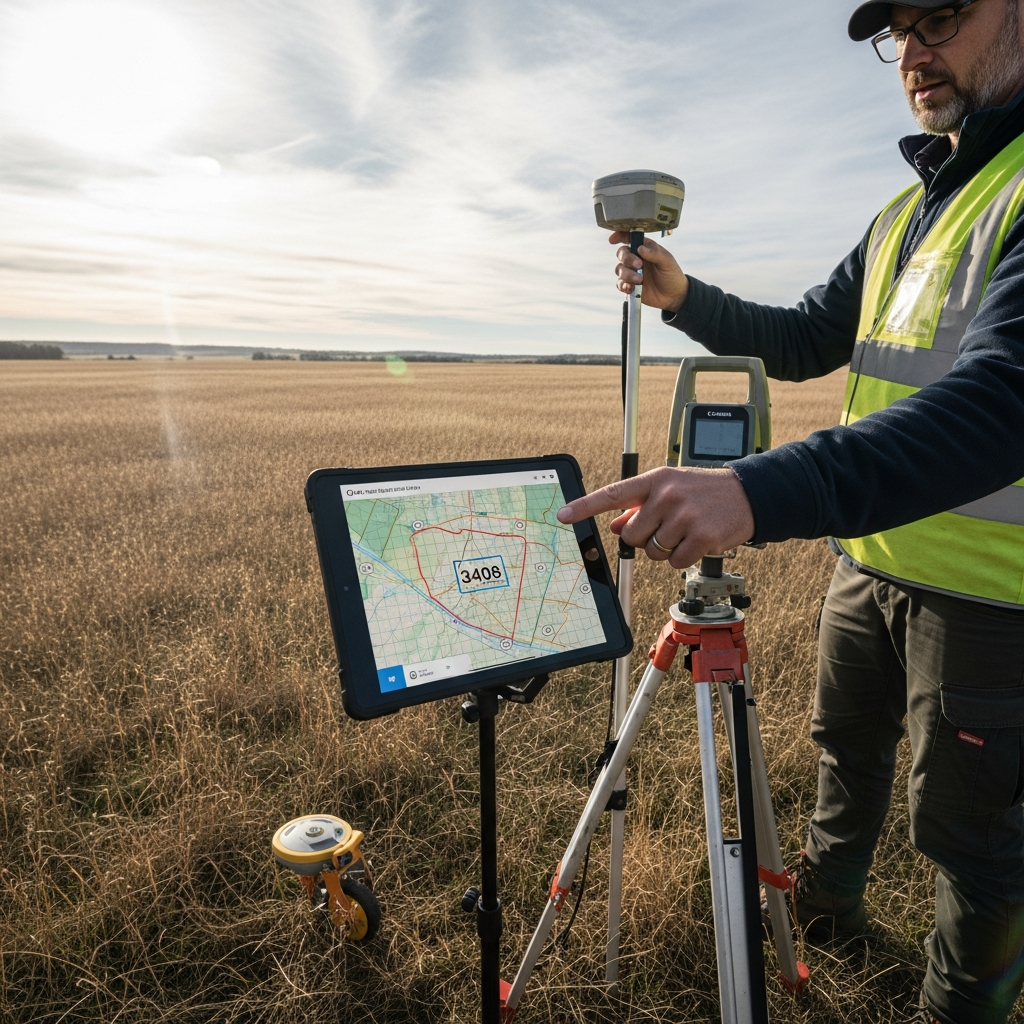
For irregular shapes (which most real land is), you’ll either need the acreage from a survey or a mapping tool. Google Earth actually has a measurement tool that lets you trace boundaries and get area in whatever unit you want. I’ve used it to settle multiple arguments about “how big is that field behind the neighborhood.”
Square Miles vs. Square Kilometers
If you’re dealing with anything international — foreign property, global statistics, scientific data — you’ll run into square kilometers. The conversion is roughly 1 square mile = 2.59 square kilometers. Or going the other way, 1 square kilometer ≈ 0.386 square miles.
The metric system makes more sense mathematically (1 sq km is exactly 1,000 x 1,000 meters), but in the US, square miles are what you’ll see in government data, property descriptions, and everyday conversation. We’re stubborn about this, apparently.
Why Precision Matters
Messing up area calculations has real consequences. In real estate, getting the area wrong by even a small percentage on a large parcel can mean pricing differences of thousands or tens of thousands of dollars. Environmental assessments for development projects depend on accurate area measurements for habitat calculations, water runoff estimates, and regulatory compliance.
My realtor friend told me about a land transaction that nearly fell apart because someone confused acres with square miles in the initial listing. The buyer thought they were getting 640 times more land than was actually for sale. That’s an extreme case, but it illustrates why knowing the difference matters.
The Practical Takeaway
For most people, you just need to know a few things: a square mile is big (640 acres), an acre is what most residential and small commercial properties are measured in, and square feet is what you use for individual lots and buildings. Keep the conversion (640 acres per square mile) in your head and you’ll be able to make sense of most land measurements you encounter.
And if your realtor says “quarter acre,” don’t say “quarter square mile.” Trust me on that one.



Stay in the loop
Get the latest seattle financial advisors updates delivered to your inbox.